OTTAWA — Connectica reporting
Indigenous women's organizations say the Carney government's 2026 budget, which pledges $50 billion over 10 years for Indigenous programs, overlooks their safety and service needs.
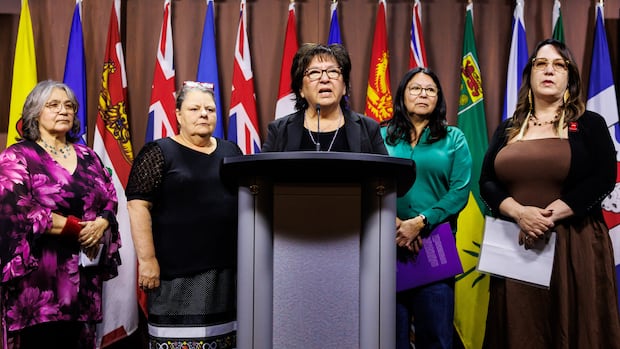
Indigenous women leaders from across Canada gathered in Ottawa on Thursday to argue that the federal budget tabled last week leaves them out of the decisions set out in a document of more than 500 pages. "Budget 2026 represents a missed opportunity to make Indigenous women's safety and healing a sustained national priority," said Josie Nepinak, president of the Native Women's Association of Canada. She was joined by Lisa Pigeau, director of intergovernmental relations for Les Femmes Michif Otipemisiwak, Rose Mary Cooper, former executive director of Pauktuutit Inuit Women of Canada, Quebec Native Women president Marjolaine Étienne and Ontario Native Women's Association chief executive Cora McGuire-Cyrette.
The Carney government's second budget pledges $50 billion over 10 years for Indigenous programs and services, including $32 billion over a decade for First Nations housing and infrastructure. Inuit and Métis organizations have said their own priorities are not reflected in the spending plan. Inuit Tapiriit Kanatami told CBC News it welcomed $575 million over five years for the Inuit Child First Initiative and the transition to the Inuit-led Pirutsiagutiit, but was "disappointed" by the lack of specific references to Inuit elsewhere in the document. Métis leaders, including Manitoba Métis Federation president David Chartrand, objected to the absence of Métis-specific funding; the word "Métis" appears once in the budget.
Cooper said the budget does not account for the dangers Indigenous women face in northern and remote communities, noting that Inuit women were not mentioned once in the document. "For many Indigenous women, safety is a plane ride away," she said, adding that most communities in Inuit Nunangat can be reached only by air and that 60 per cent have no shelters or other safe spaces. "A model designed for seven cities does not work in small fly-in communities where food and housing costs weigh much more. One size does not fit all."
Statistics Canada data cited at the news conference set out the scale of the problem: one in six Indigenous women have experienced at least one form of intimate partner violence, and while Indigenous women make up about five per cent of women in Canada, federal data show they accounted for roughly 26 per cent of women killed by an intimate partner in 2022. McGuire-Cyrette cited 2021 census figures showing 83 per cent of Indigenous women live off reserve in rural and urban centres, and said the budget is "silent for the majority of urban Indigenous agencies" while most investment goes to on-reserve services. "If we're not at the table, how can you work with us?" she said.
One measure aimed specifically at Indigenous women is $3.6 million to renew the Red Dress Alert pilot, developed with Indigenous partners to address the crisis of missing and murdered Indigenous women and girls. Nepinak said she welcomes the funding and believes it will save lives, but that it "doesn't fix or address all of the gaps that continue to exist" in safety and protections for Indigenous women. McGuire-Cyrette said the pilot addresses the "aftermath of violence" rather than prevention, adding, "We're not seeing those upstream investments."
The leaders also questioned the government's plan to end homelessness within 10 years. McGuire-Cyrette said that goal will not be achieved "unless the government works with the agencies on the ground." Cooper said that for Inuit women living in Inuit Nunangat, "the needs are greater and reflecting what those needs are will be important" as the pilot rolls out.
A spokesperson for Crown-Indigenous Relations Minister Rebecca Alty said "ensuring the safety of Indigenous women, girls and 2SLGBTQI+ people remains an urgent priority for our government," and that the budget builds on last year's $223.4 million over five years to strengthen federal action on gender-based violence and address gaps in support for Indigenous women, girls and 2SLGBTQI+ people. Pigeau said the leaders have not requested a meeting with Alty since the budget was tabled, but spoke with her beforehand and want to meet all ministers involved because the issue is "beyond just one issue." Nepinak said the leaders raised the need for supports and investments at a February conference Alty attended, and "it feels like it fell on deaf ears."
Reported with files from CBC News Politics.
Connectica provides information only, not financial, investment or legal advice.