CANADA — Connectica reporting
Carney says Canada has European and Asian options for auto manufacturing if Washington won't keep an integrated North American supply chain, ahead of a Tuesday meeting with Xi Jinping.
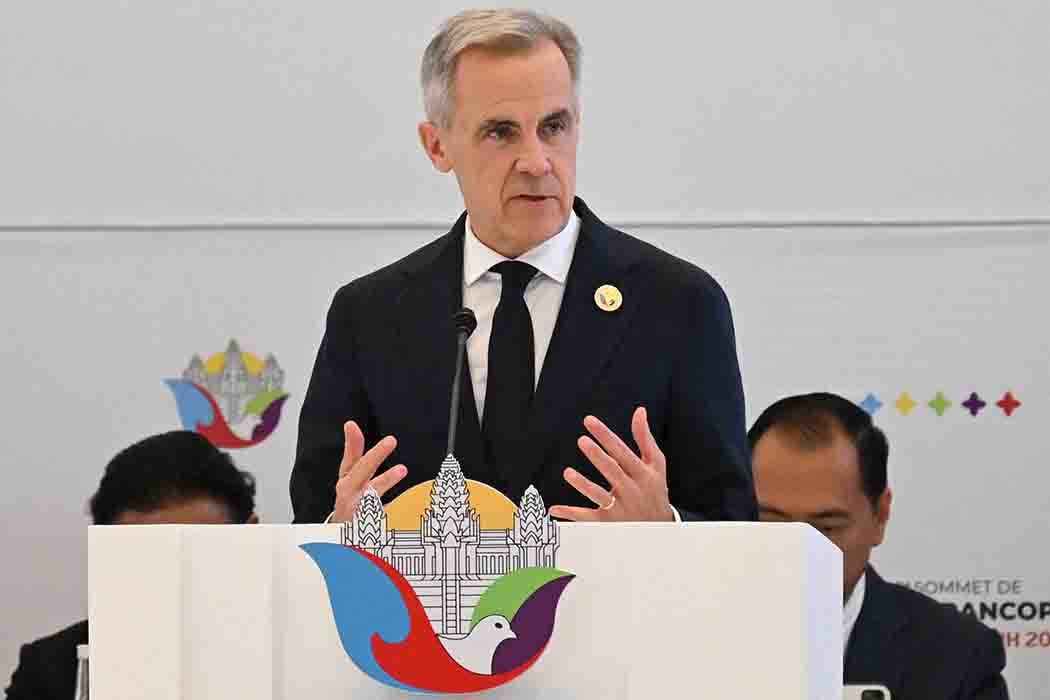
Prime Minister Mark Carney says Canada has other partners for auto manufacturing if the Trump administration does not want an integrated North American supply chain, pointing to European and Asian alternatives as he prepares to meet Chinese President Xi Jinping on Tuesday. Speaking to reporters during a visit to Cambodia, Carney said the continental market has become less integrated because of U.S. trade actions. He was referring to President Donald Trump's 25 per cent tariffs on cars built in Canada and Mexico.
The two governments have spent many months discussing a possible reduction of those tariffs but have yet to reach a deal. Carney said a cooperative auto sector between Canada and the United States is "the best result for Canadian workers, for Canadian businesses, and for U.S. consumers." Depending on where the trade negotiations settle, however, he said there will be "other options, European options, Asian options." The tariff question matters directly to Canadian parts makers and assemblers whose plants are tied to cross-border vehicle production.
Carney is midway through a lengthy trip through Europe and Asia and is preparing to fly to China for the Asia-Pacific Economic Cooperation meeting, where he is to hold a separate sit-down with Xi. On Monday he denied he was explicitly using the auto talks with Xi to create leverage against the U.S. in trade negotiations, describing the approach instead as "action, reaction." He said Canada has productive workers, an important car market and large manufacturing facilities, and that the country will move forward either way if those plants are not fully utilized in a North American context.
The meeting builds on a deal the two leaders signed in Beijing in January, under which China cut tariffs on Canadian agricultural products in return for Canada creating a low-tariff quota allowing up to 49,000 Chinese-made electric vehicles into the country annually. That pact also set a goal to "drive considerable new Chinese joint-venture investment" in automotive manufacturing in Canada within three years, but no such business deals have yet been announced. Trump administration officials have criticized Carney's government for opening its market to Chinese automakers.
Carney reiterated that any Chinese auto production in Canada would have to meet Canadian labour standards and use locally sourced parts and critical minerals in the supply chain. More broadly, he said he and Xi are looking to expand trade opportunities that benefit farmers, businesses and consumers in both countries, and that "we've established pretty clear guardrails" on where they will focus. He listed food security, financial services and energy trade — Canadian energy supply into China along with Chinese clean energy technology entering Canada — as the main priorities.
Trump is also expected to attend the APEC summit, though it is not yet known whether he and Carney will meet separately. Mexican President Claudia Sheinbaum has said she plans to meet with Carney while at APEC.
Reported with files from Financial Post, National Post.
Connectica provides information only, not financial, investment or legal advice.